
Solenoid Fundamentals
A solenoid is, in essence, a device that turns electrical energy into mechanical work via magnetism. In its most basic form it consists of a coil of wire contained within a housing, with an armature (sometimes referred to as a plunger) made of a ferromagnetic material. When a current is passed through the coil, a magnetic field is formed; this field imparts a force upon the armature, resulting in movement.
The direction of movement can be either linear or rotary, depending on the design of the device itself.
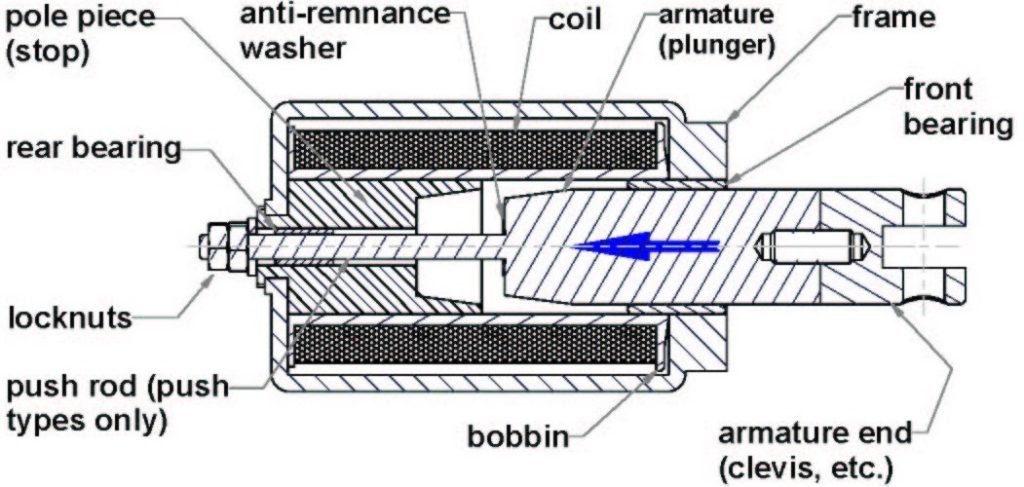
Figure 1 – Construction of simple, linear solenoid
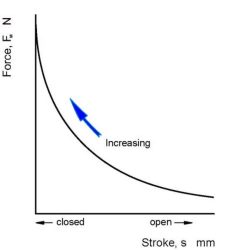
Figure 2 – Force characteristic of simple, linear solenoid
Solenoid Selection
When choosing a solenoid or other mechanism, please consider the following essential criteria:
- Function – what will the actuation type of the device be? Examples include linear, rotary, fluid control, hold and release, locking.
- Stroke – what is the actuation distance [mm] or arc of rotation [degrees] required?
- Force/Torque – what is the actuation force (linear) [N] or torque (rotary) [N.m] required?
- Power supply – is the device to be powered using an AC or DC supply? What voltage [V] is the supply?
- Duty cycle – if the device is only powered for a short amount of time, higher forces can be achieved at the same voltage
In addition to the above, the following information will be helpful in selecting the correct device for your individual application:
- Operating life – how many cycles is the device expected to complete?
- Environment – what environmental factors are there which may impact operation? Examples include ambient temperature, moisture, dust/particulates, vibrations etc.
- Installation factors – where is the device to be installed? Are there any space/orientation/mounting limitations?
- Power supply factors – what power [W] can the supply output? What about current [A]?